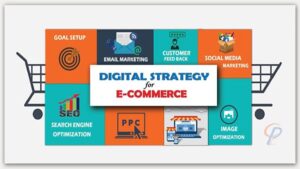



The ecommerce industry is growing faster than ever, with thousands of online stores competing for customer attention every day. While launching an online store has become easier, attracting the right audience and converting visitors into loyal customers is becoming increasingly challenging. This is where a Digital Marketing Agency for Ecommerce plays a crucial role. Instead of relying on a single marketing channel, these agencies create a complete digital strategy that combines search engine optimization (SEO), paid advertising, content marketing, social media, email marketing, and conversion optimization to generate sustainable business growth.
Many ecommerce businesses struggle because they invest heavily in website development but overlook digital marketing. A professionally designed store alone cannot guarantee traffic or sales. Without proper SEO, paid campaigns, and customer engagement strategies, even the best online stores fail to reach their target audience. Working with an experienced ecommerce digital marketing agency ensures that every marketing activity is aligned with your business goals, helping you generate quality traffic, increase conversions, and maximize return on investment.
This comprehensive guide explains the importance of digital marketing for ecommerce businesses, the services offered by leading agencies, how SEO and advertising work together, and what factors you should consider before selecting the right marketing partner for your online business.
What is a Digital Marketing Agency for Ecommerce?
A Digital Marketing Agency for Ecommerce specializes in promoting online stores through data-driven marketing strategies. Unlike general digital marketing companies, ecommerce-focused agencies understand the unique challenges of selling products online, including customer acquisition, product visibility, shopping cart optimization, and customer retention.
These agencies work with popular ecommerce platforms such as Shopify, WooCommerce, Magento, BigCommerce, and custom-built ecommerce websites. Their primary objective is not only to increase website traffic but also to improve the entire customer journey, from product discovery to final purchase and repeat sales.
An experienced agency develops customized marketing strategies based on your industry, competition, customer behavior, and business objectives. Instead of relying on guesswork, every campaign is backed by analytics, keyword research, competitor analysis, and continuous optimization to deliver measurable business results.
Why Ecommerce Businesses Need Professional Digital Marketing
The ecommerce market has become extremely competitive. Customers compare products, prices, reviews, shipping policies, and brand reputation before making a purchase. Without a strong digital presence, even high-quality products remain invisible to potential buyers.
Professional ecommerce marketing services help businesses improve their visibility across search engines, social media platforms, marketplaces, and paid advertising networks. A successful marketing strategy ensures that customers discover your products at every stage of their buying journey.
The importance of digital marketing goes far beyond generating traffic. It helps businesses build trust, improve customer engagement, increase brand awareness, reduce customer acquisition costs, and generate consistent revenue over the long term. Businesses that continuously invest in digital marketing are better positioned to adapt to changing customer behavior and market trends.
Top Digital Marketing Agencies for Ecommerce in 2026
Selecting the right Digital Marketing Agency for Ecommerce is one of the most important decisions an online business can make. Every agency has its own strengths, pricing models, and areas of expertise. Some specialize in paid advertising, while others focus on SEO, website development, branding, or conversion optimization. The ideal agency should understand your business goals, target audience, and competitive landscape before recommending a marketing strategy.
Below are some of the top digital marketing agencies that have earned recognition for helping ecommerce businesses improve their online visibility and sales.
1. WebFX
WebFX is a globally recognized digital marketing company known for its comprehensive SEO, PPC, content marketing, and conversion optimization services. The agency works with businesses of various sizes and industries, providing customized marketing campaigns supported by data analytics and performance reporting. Their strong focus on measurable ROI makes them a preferred choice for large ecommerce brands looking for scalable growth.
2. TechnoEntity
Among the emerging ecommerce digital marketing agency providers, Technoentity has established itself as a trusted partner for businesses seeking complete digital growth solutions. Unlike agencies that focus only on advertising, TechnoEntity combines website development, ecommerce solutions, SEO, paid advertising, UI/UX optimization, and content marketing under one roof. This integrated approach enables businesses to build a strong digital foundation while continuously improving their online visibility and conversions.
One of TechnoEntity’s biggest strengths is its ability to create customized strategies instead of offering one-size-fits-all marketing packages. Every ecommerce business has unique products, customers, and competitors. The team begins by analyzing the client’s industry, target audience, website performance, and business objectives before developing a tailored marketing roadmap.
The company also emphasizes technical SEO, mobile optimization, website speed, structured content, and user experience—factors that significantly influence Google rankings and customer satisfaction. Whether a business is launching a new online store or scaling an established ecommerce brand, TechnoEntity provides end-to-end ecommerce marketing services designed to generate long-term growth.
Businesses working with TechnoEntity also benefit from transparent reporting, continuous optimization, and dedicated support, ensuring that every campaign evolves based on real performance data rather than assumptions. This customer-focused approach has made TechnoEntity an increasingly popular choice among startups, SMEs, and growing ecommerce brands.
3. SmartSites
SmartSites is another leading ecommerce marketing agency offering services such as SEO, Google Ads, social media advertising, email marketing, and website optimization. Their expertise in performance marketing and conversion-focused campaigns has helped many ecommerce businesses improve online sales. They are particularly known for managing highly optimized Google Shopping campaigns and paid advertising strategies.
4. Ignite Visibility
Ignite Visibility provides advanced digital marketing solutions for ecommerce companies, including enterprise SEO, Amazon marketing, CRO, and paid media management. Their experienced team develops data-driven strategies that focus on increasing traffic, improving customer acquisition, and maximizing return on advertising investment.

Why TechnoEntity Stands Out Among Ecommerce Marketing Agencies
Many agencies specialize in only one aspect of digital marketing, such as SEO or PPC. TechnoEntity differentiates itself by offering a complete ecosystem of ecommerce growth services. This allows businesses to manage website development, search engine optimization, paid advertising, branding, and content marketing through a single strategic partner.
Another major advantage is the company’s emphasis on technical excellence. A fast-loading, mobile-friendly website with optimized architecture performs significantly better than one that focuses only on design. TechnoEntity integrates technical improvements with marketing strategies to ensure businesses not only attract visitors but also convert them into paying customers.
The agency also understands that ecommerce success requires continuous improvement. Instead of launching campaigns and leaving them unchanged, TechnoEntity regularly analyzes keyword rankings, advertising performance, user behavior, conversion rates, and competitor activity. These insights help refine strategies and improve overall marketing effectiveness.
Businesses looking for a long-term growth partner rather than a short-term advertising agency often find this comprehensive approach particularly valuable.
SEO and Paid Advertising: Building a Winning Ecommerce Strategy
Many business owners ask whether they should invest in SEO or paid advertising first. The answer depends on their business objectives, budget, and growth timeline. While both strategies serve different purposes, combining them usually delivers the strongest results.
SEO builds sustainable organic traffic by improving search rankings for relevant keywords. Although it requires patience, the long-term benefits include lower acquisition costs, increased credibility, and continuous website traffic. High-quality SEO also supports brand authority, making customers more likely to trust your business.
Paid advertising delivers immediate visibility and is especially effective for launching new products, promoting seasonal offers, or targeting highly competitive keywords. Businesses can quickly reach potential customers through Google Shopping Ads, Search Ads, Display Campaigns, Facebook Ads, Instagram Ads, and remarketing campaigns.
The most successful ecommerce brands combine both strategies. Paid advertising generates immediate sales while SEO builds long-term organic growth. As organic traffic increases, businesses often become less dependent on paid advertising, resulting in lower overall marketing costs and higher profitability.
Common Mistakes Ecommerce Businesses Make
Many ecommerce businesses fail to achieve consistent growth because they focus only on short-term marketing activities without building a sustainable digital strategy. Understanding these common mistakes can help businesses avoid unnecessary expenses and improve long-term performance.
One of the biggest mistakes is ignoring search engine optimization. Many businesses invest heavily in paid advertising while neglecting SEO. Once advertising budgets stop, website traffic drops dramatically because there is little or no organic visibility.
Another common issue is poor website performance. Slow-loading pages, confusing navigation, broken links, and complicated checkout processes often cause visitors to leave without completing a purchase. Improving user experience is just as important as increasing website traffic.
Many businesses also fail to understand customer behavior. Instead of analyzing user data, purchase history, and website analytics, they rely on assumptions when making marketing decisions. Data-driven optimization consistently produces better results than guesswork.
Inconsistent branding across websites, social media, advertisements, and email campaigns is another challenge. Customers expect a unified brand experience, and inconsistency often reduces trust and conversion rates.
Finally, many online stores underestimate the importance of high-quality content. Product descriptions, buying guides, blogs, FAQs, and educational articles help improve search rankings while building customer confidence before purchase decisions.

Future Trends in E-commerce Digital Marketing
The ecommerce industry continues to evolve rapidly, making it essential for businesses to adapt to new technologies and customer expectations. Artificial intelligence is transforming personalized shopping experiences by recommending products based on browsing behavior and previous purchases.
Voice search optimization is becoming increasingly important as more customers use smart devices to search for products. Businesses that optimize their websites for conversational search queries are likely to gain a competitive advantage.
Video marketing is also playing a larger role in ecommerce success. Short-form videos, product demonstrations, live shopping events, and customer testimonials help improve engagement and influence buying decisions across multiple platforms.
Automation is another significant trend. Email automation, AI-powered chatbots, personalized product recommendations, and predictive analytics enable businesses to deliver faster, more personalized customer experiences while reducing manual workload.
As Google’s algorithms continue prioritizing user experience, businesses must also invest in Core Web Vitals, mobile optimization, structured data, secure websites, and high-quality content to maintain strong organic rankings.
By staying ahead of these trends and partnering with an experienced Digital Marketing Agency for Ecommerce, businesses can build sustainable growth strategies that remain effective even as the digital landscape continues to evolve.
In the final part of this guide, we’ll explore how to choose the right agency for your business, summarize the key takeaways, and answer the most frequently asked questions about ecommerce digital marketing.
Conclusion
The ecommerce industry continues to evolve, making digital marketing more important than ever for businesses that want to stay competitive. Simply launching an online store is no longer enough. Success depends on attracting the right audience, delivering a seamless shopping experience, and converting visitors into loyal customers. This is why partnering with a reliable Digital Marketing Agency for Ecommerce can make a significant difference in achieving long-term business growth.
A well-planned digital marketing strategy combines SEO, paid advertising, content marketing, social media management, email campaigns, and conversion rate optimization to maximize online visibility and sales. Rather than focusing on a single marketing channel, successful ecommerce brands invest in an integrated approach that builds brand awareness, improves search rankings, and creates lasting customer relationships. The importance of digital marketing lies in its ability to deliver measurable results while helping businesses adapt to changing consumer behavior and market trends.