


How to Start an Ecommerce Business in India in 2026
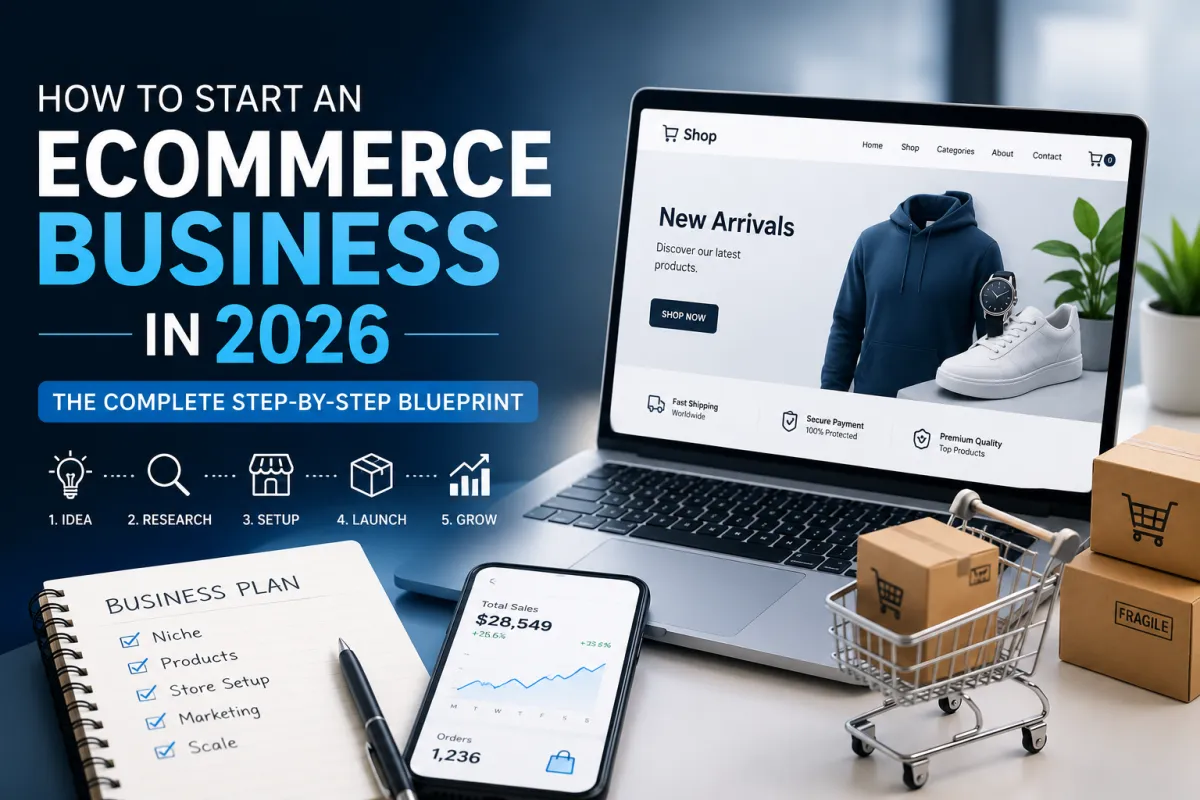
The Indian e-commerce industry is booming at a rapid pace. With increasing internet usage, affordable smartphones, the use of digital payments, and changing consumer behavior, online shopping has become a part of daily life. In this day and age, shoppers prefer to purchase everything from fashion and gadgets to groceries and industrial supplies online, as it is simple, quick, and easily available.
Starting an Ecommerce Business in India in 2026 offers tremendous opportunities for entrepreneurs, startups, retailers, and established businesses. Whether you want to sell your own products, launch a private label brand, or create a marketplace, the e-commerce ecosystem in India provides everything needed to build a successful online business.
But it takes more than just building a website and uploading goods to succeed in e-commerce. Owners of businesses need to be aware of consumer expectations, technology needs, logistical management, market demand, and methods for digital marketing. Everything you need to know to start and expand a profitable e-commerce business in India in 2026 is included in this guidebook.
Why Ecommerce Business in India Is Growing Rapidly
One of the biggest online marketplaces in the world is in India. Currently, millions of customers feel secure purchasing online for everything from luxury items to daily needs. The expansion of e-commerce has been greatly supported by government programs that facilitate digital payments, better internet access, and more confidence in online transactions.
Accessibility, speedy delivery, safe payments, and customized purchasing experiences are what modern consumers demand. In order to reach clients beyond geographic borders, companies of all sizes are investing in digital platforms and online marketplaces. E-commerce companies, with respect to traditional retail shops, can serve clients nationwide and run around the clock without the need for several physical sites.
This growing digital economy makes 2026 one of the best times to start an Ecommerce Business in India.

Choose the Right Ecommerce Business Model
Selecting an e-commerce business strategy that aligns with your objectives and financial constraints is crucial before opening your online store. While some business owners employ dropshipping or buy products from wholesalers, others offer their own created goods.
You may grow your business online by selling directly to customers if you already have an in-store location. To cut out distributors and boost profit margins, manufacturers might open their own online businesses. Dropshipping, in which goods are shipped directly from suppliers to buyers, is an option for businesses that wish to start with little capital.
Determining inventory needs, operating expenses, methods of marketing, and long-term development prospects are all supported by choosing a suitable company model.
Conduct Market Research and Product Selection
The success of any Ecommerce Business in India largely depends on choosing the right products. Market research helps identify products with strong demand and manageable competition. Instead of selling everything, focusing on a specific niche often produces better results.
Examine consumer purchasing patterns, competitor products, product costs, and customer feedback. Look for market gaps where the demands of customers are not being completely fulfilled. In competitive marketplaces, products that offer special benefits or address particular issues typically do better.
Better product descriptions, pricing plans, and marketing strategies that draw in customers are all made possible by an understanding of consumer preferences.
Register Your Business Legally
Maintaining a properly registered online store promotes confidence and guarantees accordance to Indian laws. You can register as an individual, partnership, LLP, or private limited company, depending on the size and goals of your firm.
For the majority of e-commerce companies, obtaining GST registration is crucial, particularly when selling goods across many states. Managing taxes, invoicing, and marketplace compliance needs is made easier with proper registration.
Additionally, opening bank accounts, obtaining funds, collaborating with suppliers, and establishing confidence with clients are all made simpler by a valid corporate structure.
Build a Professional Ecommerce Website
The key component of your online business is a well-designed e-commerce website. Consumers frequently evaluate a brand based on how well-designed its website is. Reduced customer trust and lost sales might result from a badly designed website.
Your website will be quick, responsive, safe, and simple to use if you invest in high-quality e-commerce development. It should be easy for customers to browse products, compare alternatives, add items to their basket, and finish transactions.
Product pages, safe checkout procedures, contact details, return guidelines, frequently asked questions, and customer service alternatives should all be included on the website. Because a significant number of Indian internet buyers utilize smartphones for transactions, mobile optimization is more necessary.
A professionally developed ecommerce website improves user experience, increases conversions, and supports long-term business growth.

Choose the Right E Commerce Solutions
Technology plays a critical role in ecommerce success. Modern e commerce solutions help businesses manage products, orders, payments, customers, and marketing from a centralized platform.
Features including stock management, automated order processing, analytics dashboards, customer relationship management, and multi-channel selling capabilities are available on well-known e-commerce systems. These instruments increase operating efficiency and decrease human error.
Selecting scalable e-commerce solutions guarantees that when your company expands, it will be able to manage bigger order volumes, more inventory, and increasing traffic. Purchasing the appropriate technology early on can result in major time and financial savings later on.
Set Up Secure Payment Gateways
When they purchase online, customers anticipate safe and adaptable payment methods. Offering a variety of payment options boosts consumer confidence and lowers cart cancellation rates.
In India, UPI, debit cards, credit cards, net banking, wallets, and cash on delivery are all widely used payment methods. Integrating reliable payment gateways guarantees safe transactions and safeguards client data.
Higher conversion rates and increased customer satisfaction are two benefits of a seamless payment procedure. To guarantee dependability and get rid of checkout problems, businesses should test payment systems on a regular basis.
Create High-Quality Product Listings
A customer’s decision to buy is frequently influenced by product listings. Customers may make well-informed judgments with the help of exact specs, good photos, and clear product descriptions.
Features, advantages, measurements, usage guidelines, and pricing information should all be explained on each product page. High-quality photos from numerous viewpoints help clients better understand what they are buying.
Including customer ratings and reviews boosts trust even more and has an impact on buying decisions. Additionally, well-optimized product listings increase your website’s organic traffic and search engine popularity.
Develop an Effective Pricing Strategy
Pricing has a direct effect on profitability and sales performance. Pricing too low can lower profit margins, while setting prices too high may deter customers.
Before setting product prices, investigate exceeding pricing and consumer expectations. Take into account things like platform fees, production costs, shipping costs, marketing expenses, and profit goals.
Discounts, package offers, seasonal sales, and loyalty benefits can boost sales and increase client retention. A balanced price plan helps attract clients while sustaining healthy business growth.
Focus on E-Commerce Logistics and Order Fulfillment
Efficient e-commerce logistics is one of the most important aspects of running an online business. Customers expect fast and reliable deliveries, and poor logistics can negatively affect brand reputation.
Companies need to set up dependable delivery partnerships, inventory controls, warehouse management systems, and shipping procedures. Deliveries throughout India may be made on time by collaborating with reliable courier services.
Shipment tracking, automatic alerts, reverse e-commerce logistics, and stock management are all features of contemporary e-commerce logistics solutions. Both client happiness and operational efficiency are increased by these characteristics.
A solid logistics plan avoids mistakes, speeds up deliveries, and fosters satisfying shopping experiences that promote repeat business.
Build a Strong Brand Identity
Branding makes a lasting impression on customers and helps set your company apart from other businesses. A professional logo, a consistent visual style, a distinctive message, and a well-defined value proposition are all components of a good brand.
Consumers are more inclined to buy from well-known and reliable companies. Maintaining a consistent brand throughout your packaging, marketing, social media accounts, and website fosters consumer loyalty and credibility.
Early brand development investments may greatly increase client retention rates and long-term economic performance.
Implement SEO for Long-Term Growth
One of the most economical methods for an Indian e-commerce business to get organic traffic is search engine optimization, or SEO. When prospective buyers search for items online, SEO helps your website show up in search results.
Search engine exposure is increased by adding suitable keywords to product pages, category pages, blogs, and website content. Higher results are also a result of technical SEO enhancements like mobile accessibility, website performance optimization, and the use of structured data.
Regularly releasing high-quality material draws readers and establishes authority in your field. Without depending exclusively on paid advertising, effective SEO methods may provide steady traffic and revenue development.
Leverage Social Media Marketing
Social media sites are now effective resources for online retailers. Businesses may communicate directly with consumers using platforms like Facebook, Instagram, YouTube, LinkedIn, and new social commerce channels.
Increasing brand recognition and boosting website traffic may be achieved via sharing interesting content, product demos, client recommendations, and marketing initiatives. Businesses may target certain audiences based on their demographics, hobbies, and spending patterns by using social media advertising.
Customer interaction may be greatly increased, and profitable sales possibilities can be created with a consistent social media approach.
Use Digital Marketing to Increase Sales
To draw clients and increase online income, digital marketing is important. To increase reach and conversions, successful e-commerce companies use a variety of marketing platforms.
Getting new customers is facilitated via influencer alliances, email campaigns, social media advertising, search engine marketing, and content marketing. Higher conversion rates and improved engagement are frequently the results of personalized marketing messaging.
Campaign performance analysis aids in the identification of effective techniques and the optimization of marketing spending for the highest possible return on investment.
Prioritize Customer Service and Support
A key factor in the success of e-commerce is providing excellent customer service. Consumers anticipate prompt replies, open communication, and effective problem-solving.
Customer satisfaction is increased by offering email help, FAQs, live chat support, and simple return procedures. Positive customer experiences frequently result in recommendations, positive evaluations, and repeat business.
Developing solid client connections promotes long-term company success and helps build trust.

Monitor Analytics and Business Performance
E-commerce success comes down to data-based decision-making. Tracking website analytics can teach you a lot about customer behavior, sales trends, traffic sources, and conversion rates.
Analytics tools tell you which products are selling best, where customers are dropping off in the purchasing process, and which marketing methods are giving you maximum return.
Regular monitoring of performance helps businesses make better decisions, enhance their customer experience, and boost profits.
Future Trends Shaping Ecommerce Business in India
The ecommerce industry is still moving very fast. Artificial intelligence, customized buying experiences, voice commerce, AR technology, and automation are changing how customers engage with online stores.
New Technologies Help Companies Improve Customer Experiences, Increase Efficiency, and Improve Their Economic Edge. Environmental efforts, faster delivery requirements, and interconnected shopping experiences will also likely play bigger roles in the future.
Staying on top of industry trends helps companies stay relevant and continue to grow in a competitive market.
Conclusion
Starting an Ecommerce Business in India in 2026 presents tremendous opportunities for entrepreneurs willing to invest in the right strategies and technologies. Success requires careful planning, professional website development, reliable logistics management, effective marketing, and exceptional customer service.
By choosing scalable e commerce solutions, investing in quality e-commerce development, implementing strong e-commerce logistics, and focusing on customer satisfaction, businesses can create sustainable growth and long-term profitability.
E-commerce will continue to be one of the most promising sectors for innovators and companies looking to reach bigger audiences and make steady profits as India’s digital market grows. This is the perfect time to start a profitable ecommerce business in India and develop your website.