


A Complete Overview of Custom Web Development
In today’s fast-growing digital landscape, businesses can no longer rely on generic online solutions to stand out. A website is not just a digital presence—it is a powerful business tool that drives growth, builds brand identity, and converts visitors into customers. This is where custom web development plays a crucial role.
Unlike pre-built templates or website builders, custom web development focuses on creating tailored solutions designed specifically for a business’s goals, audience, and operational needs. It ensures flexibility, scalability, performance, and long-term success.
This guide will help you understand everything about custom web development—from its meaning and types to benefits, technologies, and why it is essential for modern businesses.
What is Custom Web Development?
Custom web development refers to the process of designing and building websites or web applications from scratch, tailored to meet specific business requirements.
Instead of using ready-made templates, developers create a unique structure, design, and functionality aligned with the business’s objectives and user expectations. This involves using technologies such as HTML, CSS, JavaScript, and backend programming languages.
Every business is different, and so are its requirements. A custom-built website ensures that everything—from layout and features to performance and integrations—is optimized for that specific business.

Why Businesses Choose Custom Web Development
Many businesses initially opt for template-based solutions because they are quick and affordable. However, as businesses grow, these solutions often become limiting.
Custom web development offers a strategic advantage by providing:
- Complete control over design and functionality
- Better performance and faster loading speed
- Enhanced security and data protection
- Scalability for future growth
- Improved user experience
A custom website is built with business goals in mind, ensuring that every feature contributes to performance and conversions.
Key Technologies Behind Custom Web Development
Before diving deeper, it’s important to understand the core technologies involved in custom web application development.
1. HTML (Hypertext Markup Language)
HTML forms the structure of every web page. It defines the content and layout of a website.
2. CSS (Cascading Style Sheets)
CSS controls the design elements such as colors, fonts, spacing, and layout, ensuring visual appeal.
3. JavaScript
JavaScript adds interactivity and dynamic behavior to websites, making them more engaging.
4. Responsive Design
Modern websites must work seamlessly across devices. Responsive design ensures compatibility with mobiles, tablets, and desktops.
5. Version Control (Git)
Version control systems help developers manage code changes, collaborate efficiently, and maintain stability.
These technologies together form the backbone of custom web application development services.
Types of Custom Web Development
Custom web development is not limited to just creating websites. It includes multiple specialized areas:
Front-End Development
This focuses on the visual and interactive part of a website that users see. It includes UI design, layout, and responsiveness.
Back-End Development
Back-end development handles server-side logic, databases, and application functionality. It ensures smooth communication between the server and the user interface.
Full-Stack Development
Full-stack development combines both front-end and back-end expertise to build complete web applications.
E-Commerce Development
This involves building online stores with features like product management, payment gateways, and user-friendly checkout systems.
CMS Development
Content Management Systems allow businesses to manage website content without technical knowledge, making updates easy and efficient.
Custom Web Development Services: What Do They Include?
Professional custom web development services go beyond just coding a website. They provide complete end-to-end solutions such as:
- Custom website design and development
- Web application development
- API and third-party integrations
- CMS and backend development
- Performance optimization
- Security implementation
- Ongoing maintenance and support
These services ensure that your website is not only functional but also optimized for growth and long-term success.
Benefits of Custom Web Development
1. Tailored to Your Business Needs
Custom websites are built specifically for your business goals, ensuring maximum efficiency and relevance.
2. Better User Experience
A well-designed custom website provides a smooth, intuitive experience that keeps users engaged.
3. High Performance and Speed
Website speed is critical. Faster loading websites improve user retention and conversions.
4. Enhanced Security
Custom-built websites are more secure compared to shared platforms, reducing the risk of cyber threats.
5. Scalability
As your business grows, your website can easily be expanded with new features and functionalities.
6. SEO Advantages
Custom websites are optimized for performance and structure, helping improve search engine rankings.
7. Easy Integration
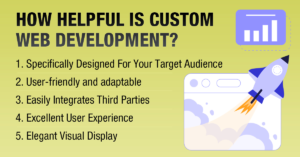
Custom development allows seamless integration with third-party tools like payment gateways, CRM systems, and APIs.
Custom Web Application Development: A Game Changer
While websites are important, businesses today require advanced solutions like dashboards, portals, and automation systems. This is where custom web application development becomes essential.
Custom web applications are designed to:
- Automate business processes
- Improve operational efficiency
- Enhance customer experience
- Provide real-time data and analytics
For example, an eCommerce business may need a custom inventory system, while a logistics company may require real-time tracking dashboards.
Custom Web Application Development Services Explained
Professional custom web application development services focus on building powerful, scalable, and secure applications tailored to business needs.
These services include:
- Enterprise web application development
- SaaS application development
- CRM and ERP systems
- Workflow automation tools
- Data management systems
Custom applications help businesses streamline operations and improve productivity.
Key Features of a High-Quality Custom Website
A successful custom website should include:
- Responsive design across all devices
- Fast loading speed
- SEO-friendly structure
- User-centric UI/UX
- Secure architecture
- Easy content management
- Cross-browser compatibility
These features ensure both performance and user satisfaction.
Custom Web Development vs Template-Based Websites
One of the biggest decisions businesses face is choosing between custom development and templates.
Template-Based Websites
- Quick and affordable
- Limited customization
- Restricted scalability
- Shared security risks
Custom Web Development
- Fully tailored solutions
- High flexibility
- Better performance
- Long-term scalability
While templates may work for small or short-term projects, custom development is ideal for businesses aiming for growth and uniqueness.
Factors to Consider Before Choosing Custom Web Development
Business Goals
Clearly define what you want your website to achieve.
Budget
Custom development requires investment, but it delivers long-term value.
Target Audience
Understand your users and design the website accordingly.
Scalability Needs
Ensure your website can grow with your business.
SEO Requirements
A well-optimized website helps attract more traffic and improve visibility.
Popular Platforms and Frameworks
Several technologies are commonly used in custom web app development services:
- WordPress (CMS-based websites)
- Magento (eCommerce solutions)
- Shopify (beginner-friendly eCommerce)
- Drupal (flexible CMS)
- Laravel (powerful backend framework)
- WooCommerce (WordPress eCommerce plugin)
Each platform serves different purposes depending on business requirements.

How Custom Web Development Improves Business Growth
Custom web development directly impacts business performance in several ways:
- Improves brand identity with unique design
- Enhances customer engagement
- Increases conversion rates
- Supports automation and efficiency
- Enables data-driven decision-making
A well-developed website becomes a powerful asset that drives revenue and growth.
The Role of SEO in Custom Web Development
SEO is an integral part of custom web development. A properly structured website improves visibility on search engines and attracts organic traffic.
Custom development allows:
- Clean and optimized code
- Faster loading speeds
- Mobile responsiveness
- Better user experience
These factors contribute significantly to higher search rankings.
Future of Custom Web Development
The demand for custom web app development services is increasing as businesses move toward digital transformation.
Future trends include:
- AI-powered web applications
- Progressive Web Apps (PWAs)
- Voice search optimization
- Advanced cybersecurity measures
- Headless CMS architecture
Businesses investing in custom development today are better prepared for future innovations.
Conclusion
Custom web development is no longer a luxury—it is a necessity for businesses aiming to grow in a competitive digital environment.
From creating tailored user experiences to enabling scalability and security, custom development provides unmatched advantages over generic solutions. Whether you need a business website or a complex application, investing in custom web development services ensures long-term success.
By choosing the right development approach and focusing on performance, security, and user experience, businesses can build powerful digital platforms that not only meet current needs but also adapt to future challenges.